During the holy month of Ramadan, household expenses increase significantly. Families must prepare meals for Sehri and Iftar, and prices of essential food items often rise during this period. For many low-income households in Punjab, managing these additional expenses can be difficult.
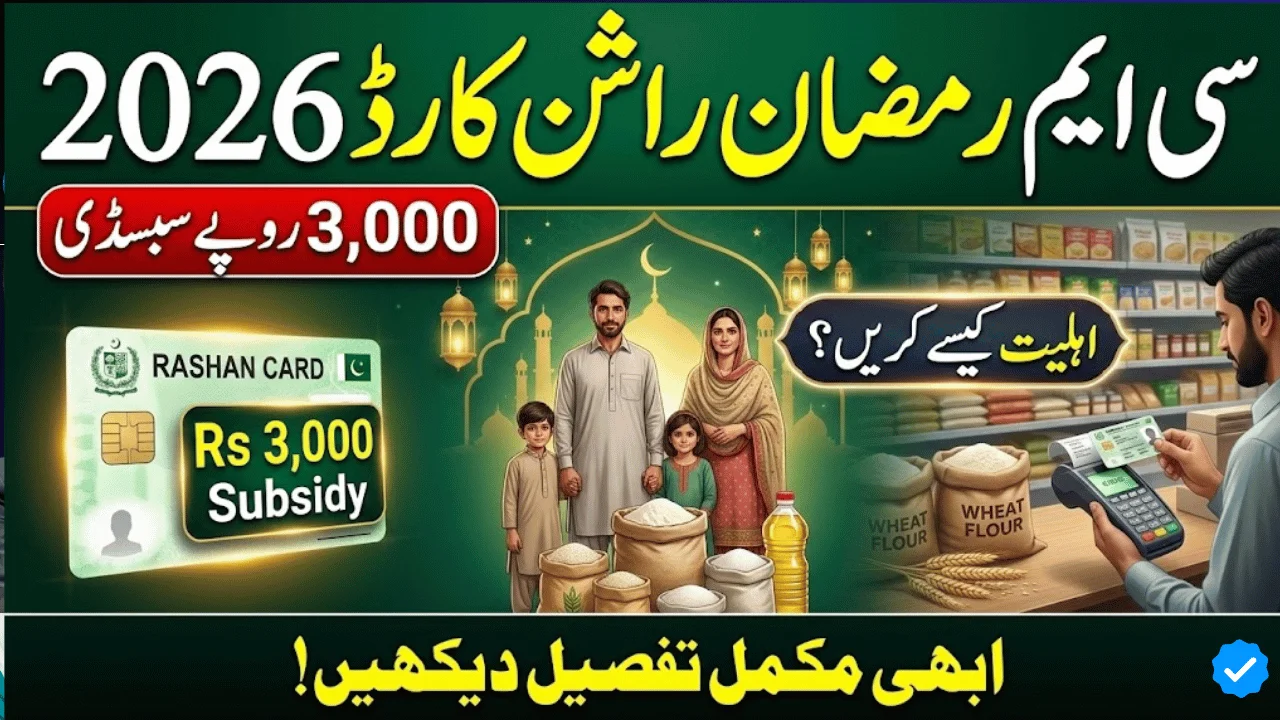
To address this challenge, the provincial government introduced the CM Ramzan Rashan Card 2026, a targeted welfare initiative designed to make basic groceries more affordable during Ramadan. Instead of traditional ration distribution lines, the program uses a digital subsidy system linked with CNIC verification, allowing families to receive monthly grocery support in a transparent way.
This guide explains how the CM Ramzan Rashan Card works, who qualifies, where to collect the subsidy, and how to check eligibility before Ramadan begins.
Overview of the CM Ramzan Rashan Card Program
The CM Ramzan Rashan Card is part of Punjab’s broader social protection strategy to ensure food security for economically vulnerable families during Ramadan.
Rather than distributing fixed ration bags, the government provides a monthly subsidy that can be used at authorized stores.
| Program Feature | Details |
|---|---|
| Program Name | CM Ramzan Rashan Card 2026 |
| Monthly Subsidy | Rs. 3,000 for groceries |
| Target Families | Approximately 1.25 million households |
| Distribution Start | February 2026 |
| Verification Method | CNIC verification |
| Distribution Points | Utility Stores & registered grocery shops |
| Helpline | 0800-02345 |
This digital approach ensures that the subsidy reaches deserving families while reducing fraud or duplication.
Why the Government Introduced the Ramzan Rashan Card
Traditional ration distribution programs often caused long queues and limited supply issues. The Ramzan Rashan Card system improves efficiency by using digital verification and retail partnerships.
Key Goals of the Program
-
Provide financial relief during Ramadan
-
Improve access to essential food items
-
Support families affected by inflation
-
Reduce corruption through digital verification
-
Allow beneficiaries flexibility in grocery purchases
By shifting to a smart subsidy model, families can choose groceries according to their needs instead of receiving a fixed ration package.
Who Is Eligible for the CM Ramzan Rashan Card 2026?
The program is designed specifically for households experiencing financial hardship.
Basic Eligibility Criteria
Applicants typically qualify if they meet the following conditions:
-
Permanent resident of Punjab
-
Monthly household income below Rs. 50,000
-
Registered in the Punjab Socio-Economic Registry (PSER)
-
Not employed in a high-grade government position
-
Not a regular income tax filer
-
Does not own large property or expensive assets
The government prioritizes families that fall within lower poverty score ranges in the PSER database.
How to Check Eligibility for the Ramzan Rashan Card
Before attempting to collect the subsidy, families should verify their eligibility through official channels.
1. Online Eligibility Check
The fastest way to check eligibility is through the PSER portal.
Steps:

وزیر اعظم رمضان پیکیج 2026 اہلیت چیک کریں
آپ وزیر اعظم رمضان پیکیج 2026 کے لیے اہل نہیں ہیں۔ آپ کی تصدیق جاری ہے۔
برائے مہربانی نیچے دیئے گئے گروپ کو جوائن کرلیں، آپ کی اہلیت کے بارے میں معلومات دی جائے گی، شکریہ۔
WhatsApp گروپ جوائن کریں دوبارہ معلوم کریں-
Visit the official PSER website
-
Enter your 13-digit CNIC number
-
Click the eligibility check option
-
View the result instantly
If your application is approved, you can proceed to collect the subsidy from authorized stores.
2. Verification Through Government Centers
For families without internet access, eligibility can also be verified offline.
You can visit:
-
Union Council offices
-
e-Khidmat Markaz
-
Local government registration centers
Bring your original CNIC for verification.
3. Helpline Assistance
The Punjab government also provides a support helpline.
Helpline Number: 0800-02345
Operators can guide citizens about eligibility, registration updates, and subsidy collection procedures.
CM Ramzan Rashan Card Distribution Schedule
The government usually begins distribution before Ramadan so that families can prepare early.
Expected Distribution Timeline
| Stage | Description |
|---|---|
| Registration & verification | Completed before Ramadan |
| Distribution start | Mid-February 2026 |
| Monthly subsidy period | During Ramadan months |
Eligible households can begin using the subsidy as soon as the system verifies their CNIC.
Where to Use the Ramzan Rashan Subsidy
Instead of collecting physical ration bags, beneficiaries receive a digital grocery subsidy usable at registered stores.
Authorized Distribution Locations
-
Utility Stores Corporation outlets
-
Government-registered grocery shops
-
Official ration subsidy centers
These retailers are connected to the government’s verification system.
How the Subsidy Collection Process Works
The process is simple and designed to minimize waiting times.
Step-by-Step Process
-
Visit a registered grocery store or utility store.
-
Provide your original CNIC to the retailer.
-
The shopkeeper verifies your eligibility through the system.
-
The Rs. 3,000 subsidy is applied to your grocery purchase.
-
Pay the remaining balance if the bill exceeds the subsidy.
This method allows beneficiaries to purchase groceries according to their household needs.
Essential Grocery Items Covered Under the Subsidy
The Ramzan Rashan subsidy focuses on essential kitchen staples required for daily cooking.
Common Items Included
-
Wheat flour (Atta)
-
Sugar
-
Cooking oil or ghee
-
Rice
-
Pulses (Daal)
-
Other approved grocery items
These items are widely used for preparing Sehri and Iftar meals during Ramadan.
Benefits of the CM Ramzan Rashan Card
The program offers several advantages for both citizens and the government.
Key Benefits
-
Monthly grocery subsidy worth Rs. 3,000
-
Transparent CNIC-based verification
-
Accessible through thousands of stores
-
Reduced waiting lines compared to ration camps
-
Improved food affordability during Ramadan
For many families, this subsidy can significantly reduce monthly kitchen expenses during the fasting month.
Pros and Cons of the Ramzan Rashan Card System
Advantages
-
Transparent digital verification
-
Flexibility in choosing groceries
-
Large retail network across Punjab
-
Reduces corruption in subsidy programs
Possible Challenges
-
Requires updated PSER registration
-
Some rural areas may have limited registered stores
-
Beneficiaries must ensure CNIC information is correct
Despite these challenges, the system remains one of the largest digital food subsidy initiatives in Punjab.
Important Tips for Beneficiaries
To avoid delays while collecting the subsidy, keep the following tips in mind.
Do’s
-
Carry your original CNIC
-
Check eligibility before visiting stores
-
Keep transaction receipts
Don’ts
-
Do not pay extra fees to agents
-
Avoid unregistered shops
-
Do not share OTP or personal information
Following these guidelines ensures a smooth and secure subsidy collection process.
Frequently Asked Questions (FAQs)
What is the monthly subsidy under the CM Ramzan Rashan Card?
Eligible families receive a Rs. 3,000 monthly subsidy for essential grocery purchases.
Do I need to apply again if I am already registered in PSER?
Usually not. Families already registered in the PSER database may be automatically considered for eligibility.
Can the subsidy be withdrawn as cash?
No. The subsidy is designed specifically for purchasing groceries at authorized stores.
What should I do if my CNIC is not showing eligibility?
You may need to update your information in the PSER database through a Union Council or government office.
Is there any registration fee for the Ramzan Rashan Card?
No. The entire process is completely free.
Conclusion
The CM Ramzan Rashan Card 2026 is an important welfare initiative designed to help families manage rising food costs during Ramadan. By offering a Rs. 3,000 monthly grocery subsidy, the program ensures that vulnerable households can access essential food items without facing severe financial stress.
Through digital verification, transparent distribution, and partnerships with local grocery stores, the program represents a modern approach to social welfare. For families struggling with inflation, this initiative can make a meaningful difference during the holy month of Ramadan.